ISSN 1005-2992 CN 22-1373/TM
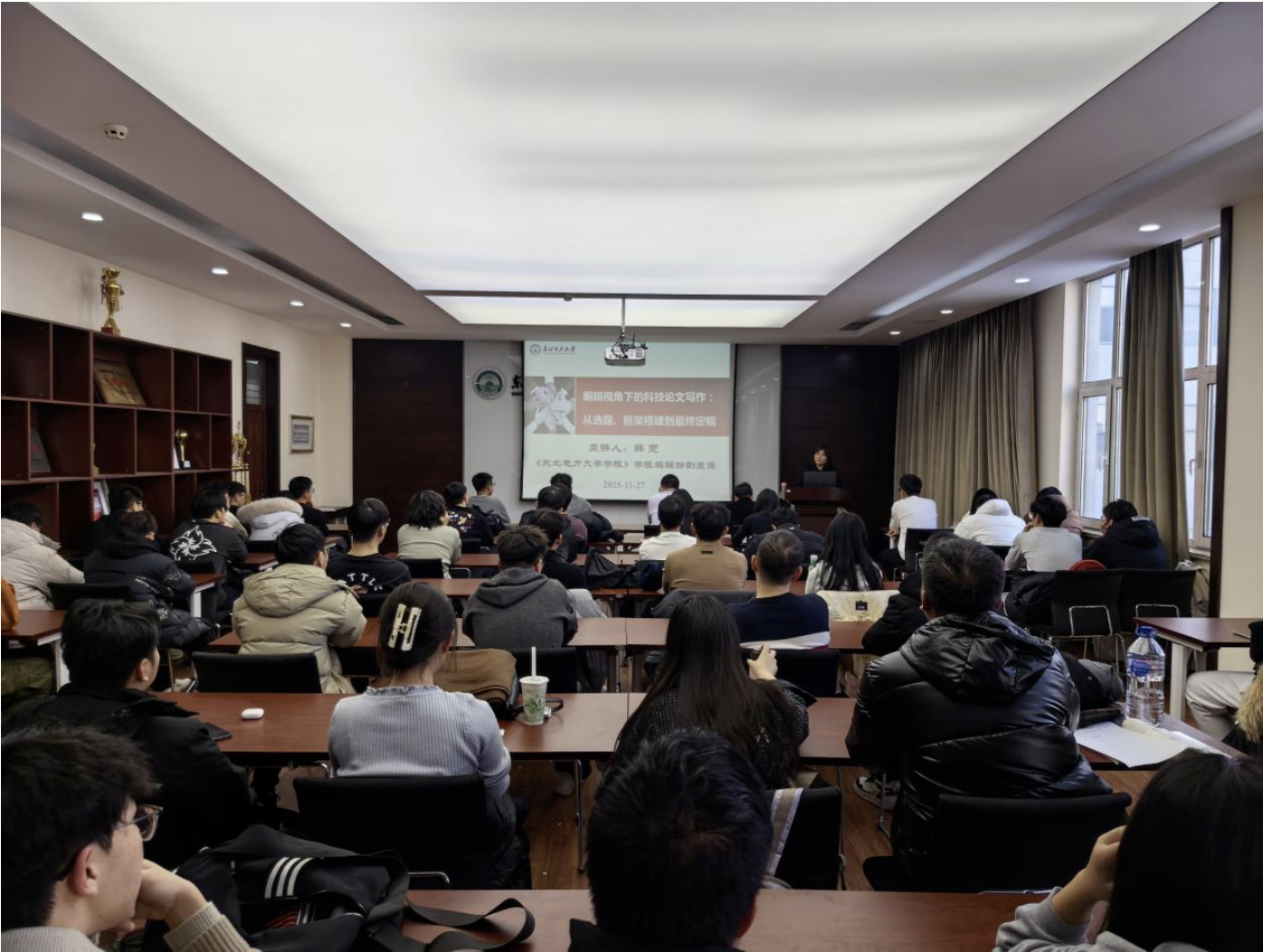
To effectively improve graduate students’ scientific paper writing skills and facilitate the efficient transformation of academic achievements, the School of Electrical Engineering specially invited Associate Editor Xue Wen from the Editorial Office of Journal of Northeast Electric Power University to give a special academic report entitled Scientific Paper Writing from an Editor’s Perspective: From Topic Selection, Framework Construction to Finalization in Room A412 of the Electric Power Building on the afternoon of November 27. The report was chaired by Lan Yang, Deputy Secretary of the Party Committee of the School of Electrical Engineering.
Associate Editor Xue Wen systematically guided the students through the key points of the entire process of scientific paper writing. In terms of topic selection, based on submission cases of Journal of Northeast Electric Power University, she emphasized that topics should closely follow the frontier of the discipline, balance theoretical value and application prospects, and avoid the two major misunderstandings of “repetitive research” and “overly broad topics”. Regarding framework construction, she analyzed the writing standards of core sections including abstract, introduction, experimental methods, and result analysis, pointing out that a logical closed loop is the key to improving paper quality. At the finalization stage, she focused on detailed requirements such as reference formatting and chart standards, stressed the importance of academic integrity, and warned of the serious consequences of academic misconduct including data falsification and plagiarism. The report was rich in practical content, providing both theoretical guidance and real cases, which deepened the graduate students’ understanding of paper writing.
This special report is an important measure for the School of Electrical Engineering to strengthen the quality of graduate education and consolidate the foundation of academic competence, precisely meeting the core needs of graduate students in their academic development. In the future, the Editorial Office will continue to cooperate with various schools to build a platform for academic exchange and guidance. Through diverse forms such as expert lectures and manuscript reviews, it will provide more targeted academic services for teachers and students, and help steadily improve the quality of academic outputs of the university.